
acupuncture
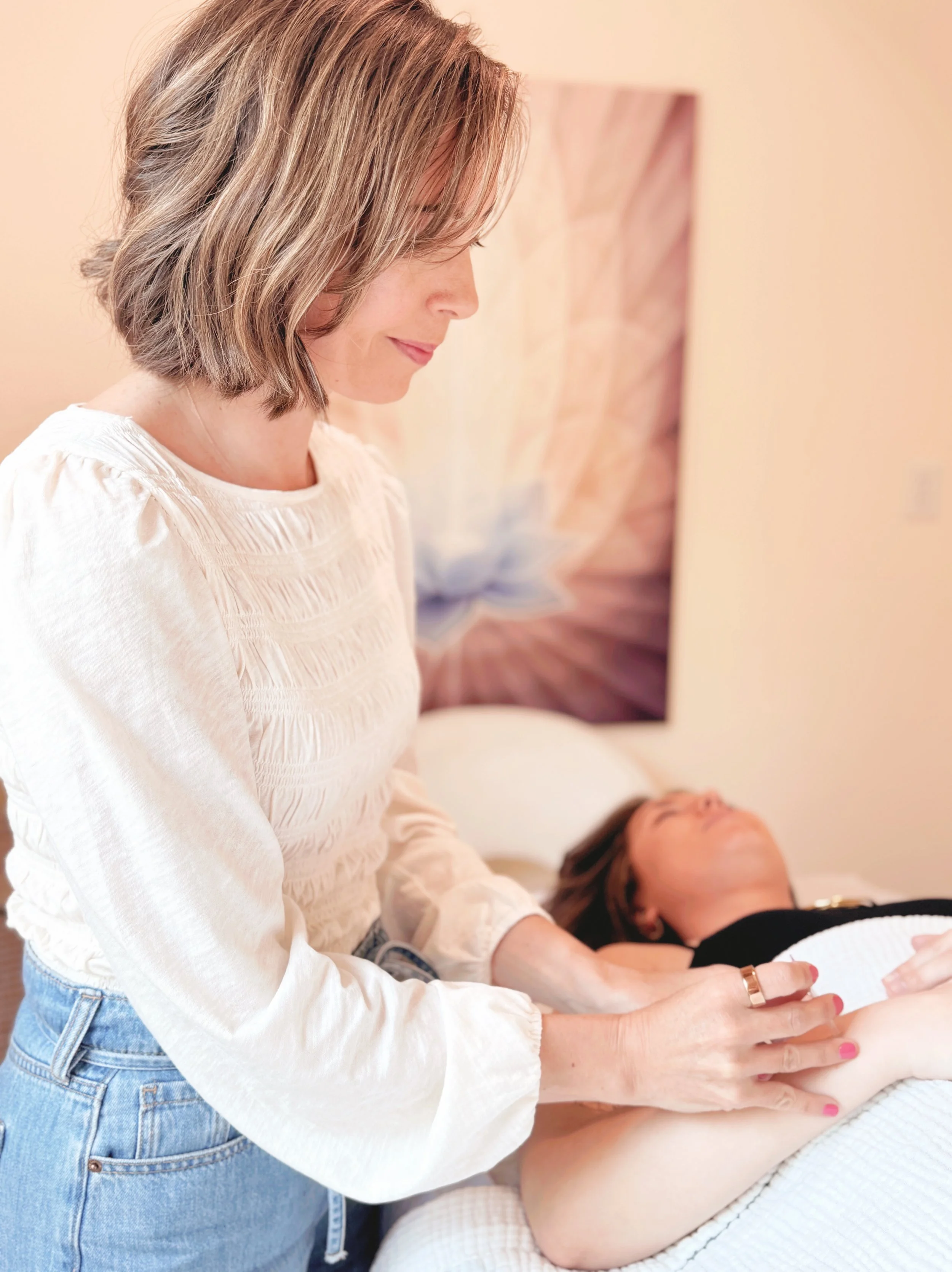
Traditional Chinese Medicine (TCM) acupuncture is a gentle, time-tested form of healing that supports the body in returning to balance.
In TCM, the body is seen as an interconnected system—where physical health, emotional wellbeing, and the nervous system are all deeply linked. When everything is flowing well, we tend to feel more like ourselves: calmer, more energized, and more resilient. But stress, life transitions, and hormonal changes can disrupt that balance.
Acupuncture involves the placement of very fine, sterile needles at specific points on the body. These points are chosen to support your body’s natural ability to regulate, restore, and heal.
Many people are surprised by how relaxing treatments feel—often entering a deeply restful state during a session.
Acupuncture for Hormone Balance & Women’s Health
Hormonal changes—whether during menstruation, pregnancy, postpartum, or perimenopause—can place extra demands on the body.
Rather than forcing change, acupuncture works by supporting the systems that regulate hormones.
This can help with:
Irregular or painful cycles
PMS and mood changes
Fertility support
Postpartum recovery
Peri-menopause and menopause symptoms (like hot flashes, sleep disturbances, or irritability)
Cysts, fibroids, pelvic pain, PCOS
By supporting the nervous system, acupuncture also indirectly supports hormonal balance—since stress and hormones are closely connected.
Acupuncture for Stress and calming the Nervous system
When you’ve been under stress for a long time(yes, even low grade stress), your nervous system can become stuck in a state of “doing” or “coping”—making it hard to truly rest.
Acupuncture helps signal to your body that it is safe to slow down.
This can:
Calm the stress response
Support deeper relaxation and sleep
Reduce feelings of overwhelm and anxiety
Help your body shift out of survival mode
Over time, this creates more space for ease, clarity, and steadiness in daily life.
craniosacral therapy
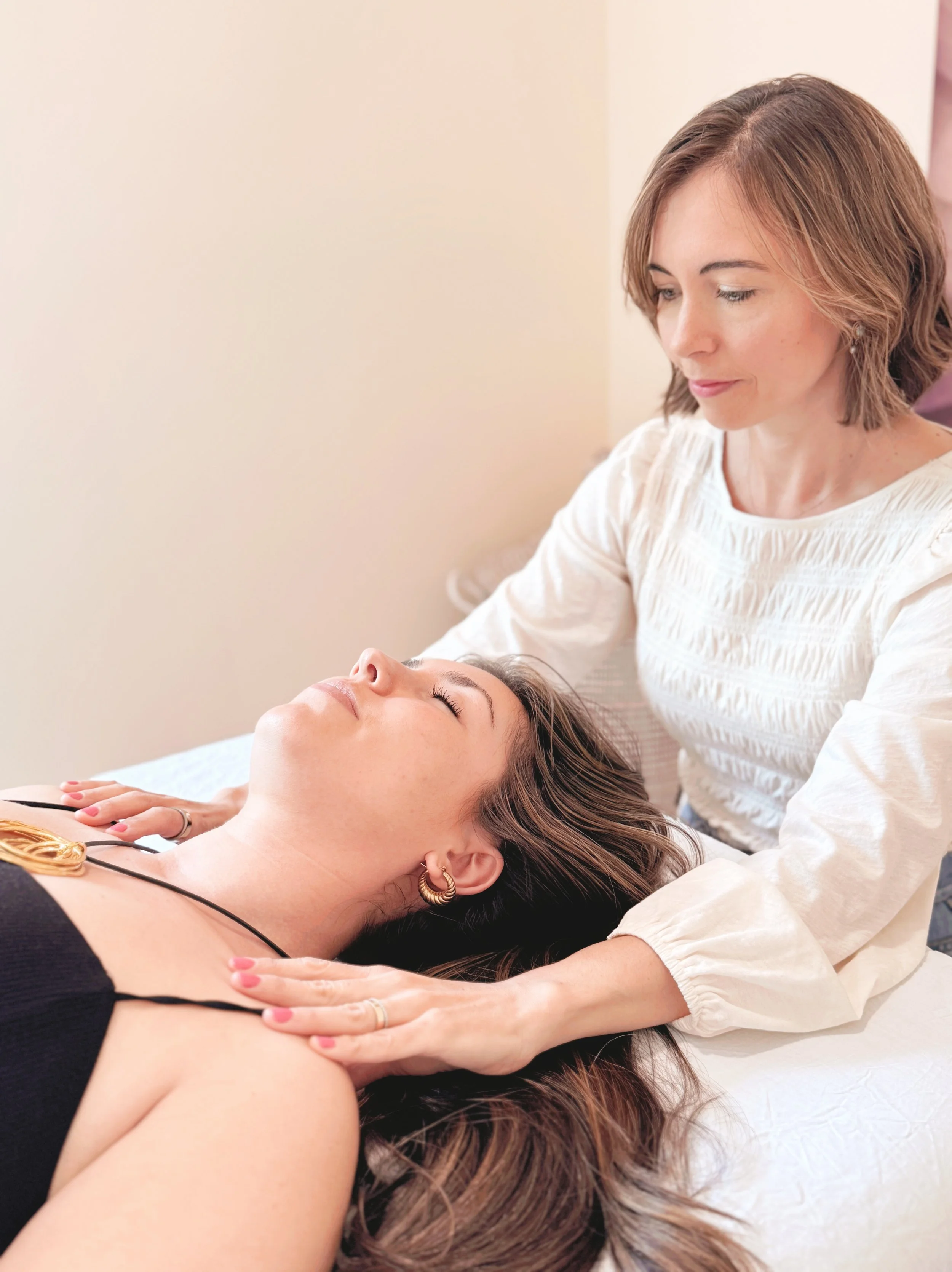
Craniosacral therapy is a gentle, hands-on treatment that helps the body release tension and settle into a state of deep relaxation.
Using a very light touch, the practitioner works with the head, spine, and body to support the natural rhythms of the nervous system. It’s subtle but powerful—many people feel a sense of calm and stillness during and after a session.
When stress, physical strain, or life experiences build up over time, the body can hold onto tension—especially in the nervous system.
Craniosacral therapy helps the body let go of that tension.
It can support:
Stress and anxiety
Nervous system regulation
Headaches and tension
Fatigue and burnout
Emotional overwhelm
Pain reduction
Post-concussion support
ADD/ADHD
Behavioral challenges in children
What to expect in a session:
Sessions are deeply relaxing. You remain fully clothed, usually lying down, while gentle contact helps your body unwind at its own pace.
Many people describe feeling:
Grounded
Calm
More connected to their body
Rested in a way that’s hard to access on their own
Experience a sense of release—physically and emotionally
Leave feeling lighter, calmer, and more supported

Naturopathic women’s health
What Is Naturopathic Medicine?
Naturopathic medicine is a holistic approach to healthcare that focuses on supporting the body’s natural ability to heal and restore balance. Rather than looking at symptoms in isolation, it considers the whole person—your physical health, emotional wellbeing, lifestyle, and environment. Care is individualized, taking the time to understand your unique experience and what your body needs in order to feel more supported and resilient.
My approach
In addition to collecting a comprehensive health history from my patients, I order appropriate and tailored functional lab testing to get the clearest picture possible of how to strengthen and balance the endocrine system. Some of my favorite lab tests to order are:
Extremely comprehensive blood work through a local lab like Quest
Comprehensive GI tests including GI Map, CDSA, breath tests(for SIBO/IMO), food allergy/sensitivity panels
DUTCH urine testing for hormones and adrenals
Salivary adrenal panels
From there we work together to come up with a personalized plan which may include dietary changes, herbal medicines, supplements, lifestyle and stress mediating therapies, acupuncture and craniosacral therapy sessions. The plan is always tailored to fit the individual needs and wishes of my patients and ebbs and flows as symptoms improve.
How Acupuncture, craniosacral therapy, and naturopathic medicine Work Together
Acupuncture and craniosacral therapy offer gentle, hands-on support to calm the nervous system, release tension, and help your body shift out of stress and into a state of rest and repair. These deeply restorative treatments can improve sleep, reduce overwhelm, and support hormonal balance by creating the conditions your body needs to regulate more effectively.
Naturopathic medicine complements this work by looking at the bigger picture—helping to identify and address underlying imbalances through nutrition, lifestyle support, and natural therapies. Together, these approaches support your body from multiple angles, creating a more integrated and lasting sense of wellbeing.
| Area of Training | Naturopathic Medical Degree (ND) | Conventional Medical Degree (MD) |
|---|---|---|
| Foundational Sciences | Anatomy, physiology, biochemistry, and pathology | Anatomy, physiology, biochemistry, and pathology |
| Clinical Training | Holistic, patient-centered supervised clinical care | Hospital and specialty-based clinical rotations |
| Nutrition | Extensive training in clinical nutrition | Limited nutrition training |
| Herbal Medicine | In-depth botanical medicine training | Not typically included |
| Pharmacology | Pharmaceutical training plus natural therapeutics | Extensive pharmaceutical training |
| Lifestyle & Prevention | Strong focus on prevention and lifestyle care | Included but not a primary focus |
| Hands-On Therapies | May include acupuncture and physical medicine | Not typically included |
| Approach to Care | Root-cause, holistic, individualized | Diagnosis and treatment focused |
| Philosophy | Supports the body’s natural healing ability | Focus on disease treatment and management |
NATUROPATHIC Doctors vs. MEDicAL DOCTORS: What’s the difference?
Both ND and MD programs include rigorous scientific training and clinical experience, but they differ in how they approach care. Naturopathic medicine places more emphasis on prevention, lifestyle, natural therapies and finding the underlying root cause of illness or suffering. Here is a breakdown: